Friday, 27 February 2015

ARNAB GOSWAMY -- THE MAN EVERYONE LOVES TO HATE

A lot of people watch the NEWSHOUR on Times Now. Not because it enlightens, but because it entertains. And the entertainer-in-chief is none other than Arnab Goswami, the anchor of the programme and the editor-in-chief of the channel.

In most social gatherings, after the usual preliminary inanities, the discussions veer round to him. Most people agree that Arnab is pompous, loud-mouthed and dominating with an uncanny ability to needle the people he is interviewing by means that are not taught in journalism schools. He rarely allows the others to complete what they are saying. And, except for a lot of hot air, nothing comes out of the programme. Episode after episode, featuring discussions on various subjects under the sun, featuring some of the biggest celebrities, remain inconclusive simply because Arnab does not allow the participants to talk...

Yet people watch the show for pure entertainment value. It is the male equivalent of the soap operas that grip the imagination of women TV addicts. It has sound. It has fury. There are verbal fights. There are emotions... But in the final analysis you are left wondering what the discussion was all about in the first place.


Some months ago (in fact, it was when “Maunmohan Singh” was still India’s PM), I received a “forward” in my e-mail inbox. It was in the form of a father’s letter to his Canada-based daughter and the subject of the letter was none other than Arnab Goswami. I reproduce the letter here because it gives a fairly accurate picture of the man everyone loves to hate.


Heregoes :

My Dear Sharada
Sometime ago during a Google group discussion you innocently asked: “But who is Arnab?”


In India not knowing Arnab is against national interest. You are lucky you live in Canada. But if you don’t want to be deported on arrival on your next visit, you better pay attention to this complimentary crash course on the subject.


Arnab, as in Arnab Goswami, is India’s most-watched prime time news anchor and editor-in-chief of Times Now. But designations don’t even begin to describe him or what he is famous for.


You must have heard about hurricanes Katrina and Sandy. Like them, Arnab is also a storm, a news-storm that hits India every night via his show, the “Newshour”. Nobody is quite sure how, but somehow Arnab gets to know the questions that the “whole nation” wants answers for. He also has the unpublished list of sinners the nation wants hanged before midnight that night. In effect, Arnab speaks for a "billion-plus people" each time he opens his mouth.


I can’t say for sure if he took this burden upon himself voluntarily or if his employers made it a contractual obligation. Whatever it is, the fact is that Arnab has come to relish asking the most “simple and direct” questions to the most dubious people demanding instant answers to complex problems because the “nation wants to know” and it wants to know “tonight” as in right now.


That’s how impatient India has become while you’ve been away, Sharada.


The Newshour airs on weekdays from 9 PM and continues till Arnab’s pleasure lasts. Often the show stretches up to 10.50 PM. That’s actually “News hour-and-three-quarters-and-then-some” but I guess Arnab has not asked himself a “simple, direct” question: how many minutes make an hour?

That, or his primary school maths teacher is not his viewer. In which case it is safe to say Arnab speaks for a billion-plus minus one Indians.


You will see that at the altar of national interest it is not just the hour that is stretched.
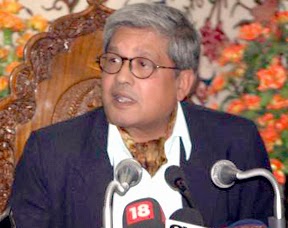


About two decades ago, Dileep Padgoankar was the editor of the Times of India owned by the Sahu Jains of Bennett Coleman & Co who also own Times Now. Padgaonkar had pompously proclaimed then that he held the second most important job in the country after the prime minister's. Arnab hasn’t said so, but I think he disagrees with Padgaonkar on the pecking order:  it’s now the prime minister who holds the second most important job in the country.


Hence Arnab runs the show like he would run the country or like the prime minister should but doesn’t.


You see, Sharada, there’s an awful lot of stuff the nation wants to know by nightfall but our prime minister (Maunmohan Singh) isn’t much of a talker. Arnab fills the need gap. He opens his show with a passionate agenda-setting preamble that spells out all the problems of the day and how he wishes to solve them. We gratefully receive this wisdom and call it Arnab’s Address to the Nation, a prime ministerial duty that has fallen on his broad shoulders because the real guy has abdicated it.


Let me tell you this, however. In all fairness, Arnab is a very reluctant power-grabber. It is not his intent to upstage the prime minister or make him look silly. He gives the prime minister an entire day to prove his worth and gets to work only at 9 PM when it is clear that the latter can’t handle stuff.


He then solves all outstanding national issues of the day in just one 110 minute-hour of feverish debates where he grills the skin off the back of everybody who dares to stand in the way of India’s national interest.


He is unrelenting in his pursuit of the truth and doesn’t give up unless or until everybody has agreed with him.


“I am worried”, “I am concerned”, “I won’t let you politicise”, “I don’t agree”, “you can’t get away", "you have to tell me right now….” are some of the phrases he uses to suggest he is in complete control and that endears him to a nation starved of decision-makers.


Arnab hates home work. He wants to settle everything here and now, tonight. As a result, in Arnabcountry, there is no trace of the policy paralysis that has grounded the prime minister in the real country. Here you get resolutions, decisions, orders, diktats, judgements, justice and denouements all in one place, one show, by one man.


The only people paralysed are the victims of his grilling, and the bevy of experts he gathers around himself, not because he needs them, he doesn’t, but because it must feel awfully good to invite experts and out-talk them on national prime time.


Like confused baboons trapped in little boxes, the experts, who are neatly arranged around Arnab’s own imposing self in the centre of the screen, keep staring into nothingness and nodding most of the time.


Yes, you get the drift, Sharada, Arnab is the main dish here. The rest are just intellectual dips.


For most of their airtime the experts keep putting up their hands or calling out “Arnab….Arnab….” to indicate they want to make a point. Arnab is too engrossed in disagreeing with what he has not allowed them to say to care too much.


Some clever guests try to appeal to his Assamese roots by hailing “Ornob… Ornob”. He ignores them as well. Nationalism, after all, is above parochialism. The cleverer among them have cracked the code: they just agree with Arnab in exchange for a little extra air time. These are usually the people who have paid close attention to Arnab’s Addresses to the Nation and picked up the right cues on what to say that will get them his benefaction.


It is tough to figure out why Arnab needs any experts at all because he knows the answers to all his questions. Times Now insiders say that more often than not he finds questions to the answers he already has. On his show, politicians can’t politicise, bureaucrats can’t beat around the bush, sportspersons can’t play games and lawyers can’t use legalese. In fact anybody who is good at something can’t do what they are known to do, to the extent that even civil society can’t be civil, especially if it wants to get a word in sideways. Everybody has to be direct, honest, blunt and keep things simple because that is what the (one-man) nation wants.


Corruption, political expediency, opportunism, forked tongues, doublespeak, dishonesty and hypocrisy, are red rags to Arnab. He takes them head-on with the help of his reporters who keep throwing up “documentary” evidence ever so often to expose scamsters.


Usually this is a thick sheaf of indistinguishable papers Arnab holds up threateningly. It could be a bunch of used airline e-tickets for all we know, but since we don’t, he waves the sheaf confidently in the face of the enemies of the nation and it is generally assumed he’s got some incendiary stuff in there. None dares to question or ask Arnab to lay the papers to public scrutiny for fear that they would be subjected to the equivalent of a rape on TV.


Arnab’s problem-solving repertoire is not restricted to national boundaries. In fact, he is at his best when dealing with nations that have evil designs on India. The patriot in Arnab is best aroused when he is dealing with that evil, failed, rogue nation called Pakistan. He deals with Pakistan like no prime minister has ever been able to or decimates it like no Army has ever managed to. Each time a blade of grass bends to the breeze on the LoC, Arnab breathes fire at Pakistan for trying to sneak in terrorists into the country. He lines up a battery of serving and retired generals of Pakistan and conducts the verbal equivalent of a summary execution.


Yet, the same generals keep resurfacing on Arnab’s show each time he feels the urge to have a Pakistani or two for dinner. This causes much wonderment among Newshour hounds on the masochist streak that makes the Pakistani generals offer themselves up as bait repeatedly. So, it is assumed the money must be good. But since Arnab insists that Pakistan is the way it is only because the generals have sold their country cheap, it is unlikely he is blowing his budget for this routine cross-border target practice. 


Of course, left to Arnab, Pakistan would have existed only as the largest crater on earth since the meteors wiped out all life on the planet. Yes, he would have nuked it many times over by now.


The Times of India, the country’s oldest English newspaper and the mother brand from the Times Now stable runs Aman Ki Aasha (Hope for Peace), the widely-acclaimed campaign for ending India-Pakistan hostilities. Just as Arnab doesn’t seem to know of this campaign, the Times of India seems quite oblivious of the fact that the last time there was absolute peace on the LoC was when Arnab took a two-week holiday in early September. It could be the marketing genius of the Times group to milk the issue from both ends or it could also be that their internal boundaries are not as porous as our LoC.


Apart from conducting war exercises against Pakistan, Arnab-land is eyeball-to-eyeball with China, exposes the double standards of America in almost anything it does and highlights the hypocrisy of racist Australia which loves the education dollars from India but not the brown students who come along with.


His blood boils so much when an old Sikh is roughed up by a bunch of racist women in the UK that he almost gets the whole of Punjab to rise in revolt against the Indian government’s inaction -- even though there is nothing it can do as the gentleman is a citizen of the said country -- or builds a tide of emotional revulsion against “inhuman” Norway for snatching an infant from his Indian mother’s custody for alleged physical abuse.


I can go on and on, Sharada, but everything good must come to an end and so must my Arnab eulogy.


So, in short and in conclusion, here’s what I have to say: Arnab is not just the editor-in-chief of Times Now. He’s India’s Protector-in-Chief. He is the guy who is keeping India safe while you are away on selfish pursuits like earning money in Canada. You are lucky you can get away by not knowing him.


For a billion-plus Indians, minus of course his maths teacher, that is not even a distant option. Because, truth told, Arnab is the best we have got !


Your loving dad


Post script : Why is the invincible, irascible know-all, Arnab Goswamy always on tenter-hooks when interviewing Jayalalithaa? One wonders...


Saturday, 7 February 2015

THE 3G LOOT (PART 2) - THE SCAM THAT DID NOT GO THROUGH

In this, the second part of my investigations into the 3G loot, let us find out the reasons why 3G telephony did not come of age in India 
and how a scam-in-the-making got aborted.

Sanjeev Kumar Dwivedi hailed from Ranchi, but had made Chennai his home. He had considerable expertise in the telecom industry. Acting as a consultant for Ice Group, he lined up 11 global companies for negotiations. After several rounds, Ice Group identified California based investment company Vale Ventures  headed by a NRI lawyer Selvaraj Venugopal.

My investigations reveal that Vale Ventures floated Venus Enterprises in Mauritius and routed all their funds to India taking advantage of the special tax treaty between India and Mauritius. In an e-mail to Ice Televentures, Selvaraj expressed his interest in the project  and preferred option to fully own the whole project  through an outright purchase. “However we are also open to consider creating a special purpose vehicle and get  into a joint venture between both our entities and  get the project done,” Selvaraj said. He was also ready to sign a Non-disclosure agreement.

Before signing non-disclosure agreement for the deal, Selvaraj demanded information regarding the tie up between TVS-ICS and Ice Group as the business plan provided by TVS–ICS had not mentioned the role of the Ice group in the deal.  But since Ice Group had claimed ownership of the project, he wanted an explanation from the consortium regarding the share of partnership.


During a meeting in Chennai in September 2009, he was offered the entire BSNL Infra deal worth Rs 40,000 crore. The size of the project and the money involved fascinated him. But since it was beyond his capacity to invest so much,  Selvaraj changed his business plan and started selling the project globally. Vale Ventures tied up with Larsen and Toubro in a joint agreement with Ice Televentures for implementing the project. The head of the Infrastructure Division of L&T issued a Letter of Intent for the deal with Selvaraj. 

Then he contacted Hong Kong based SAIF Partners headed by Ravi Adusumalli, NRI businessman from Hyderabad. Ravi Adusumalli and Selvaraj Venugopal arrived in Chennai in October 2009 and held several rounds of discussions with Samson Manuel, Shyam, BV Sanjeevkumar and Sanjeev Kumar Dwivedi and finalized the deal. According to the agreement, SAIF Partners was to channelise initial investment by the first week of November. 

According to Sanjeev Kumar Dwivedi, Ice Group (read the K Family) received the funds for the project in November. Interestingly, these deals were made without having original Purchase order from BSNL or any offer letter in the name of TVS-ICS.

But by this time, the story of the 1,76,000 crore rupees 2G scam had broken out. On October 22, 2009, the Directorate General of Income Tax Investigations raided the offices of the Director of Telecommunications in New Delhi in connection with the 2G scam. On November 16, the CBI sought details of the tapped conversations of corporate lobbyist Niira Radia to find out the involvement of middlemen in the grant of  spectrum to telecom companies. Things started getting too hot for Raja and his political masters in Chennai. And a decision was taken to leave the 3G infra deal in limbo till things quietened down.

Unfortunately for them, things did not quieten down. Raja was arrested in February 2010. Months later, Kanimozhi and others were also arrested. Charge sheets were filed. The media went crazy... In the mad frenzy, infrastructure for 3G was forgotten altogether. 


Like in 2G spectrum allocation, the BSNL Infra deal for 3G also lacked transparency and flouted every canon of financial propriety, rules and procedures to benefit a few shady companies and their benami promoters. But the brilliance of the BSNL deal was the real benefactors of the deal never came to the light. Just as a thief cannot cry out when stung by a scorpion, those who parted with money to corner what was patently an illegal deal, are in no position to complain.

The result – though a national loot did not take place as it did in the 2G allotment, the nation suffered in as much as the transmission towers were never installed. Even today, BSNL’s infrastructure is not adequate to support 3G. And that accounts for the large number of calls that do not go through, calls fading away or breaking midway, slow speed of internet connectivity, absence of VOIP and so many other maladies plaguing BSNL.

Thursday, 29 January 2015

THE 3G LOOT (PART 1) - THE UNKNOWN STORY

I have a BSNL mobile connection. It's highly temperamental. Sometimes, during a call, the voice fades away and the connection breaks. Most times the call does not go through at all. The signal keeps fluctuating for no rhyme or reason. Very frequently, while on the move, I expect the signal to get cut. But it doesn't....

When I checked out with a BSNL lineman on the reasons for my mobile connection's eccentricity, he spread out his hands, expressively. "We just don't have enough towers", he said. "Both 2G and 3G are operating through the same towers. That's why we have so much problems". 

He was only reiterating what I had known all along. I am sure the Indian people would also like to know what is wrong with our national telecom major.


The year : 2008. India was on the threshold of a telecom revolution. Implementation of 2nd generation telephony (2G) was well under way. And the nation was getting ready to usher in 3G technology. The third generation telephony would give access to uninterrupted wireless broadband and internet connectivity, high speed data connections, VOIP (Voice Over Internet Protocol) services and several other facilities one normally associates with telecommunications in developed countries.

May Day 2008 : Bharat Sanchar Nigam Limited (BSNL) unusually issued a tender notification on the national holiday inviting bids for upgrading BSNL's infrastructure to support the proposed 3G network in the country. The mega bid worth Rs 40,000 crore for planning, engineering supply, installations, testing and commissioning of infrastructure for 90 million lines of mobile expansion in six phases was an ambitious project, extremely tempting for all key players in the telecom Industry.

On instructions from the then Telecom Minister, Andimuthu Raja, then CMD of BSNL Kuldeep Goyal, directed all his immediate subordinates to work with the Department of Telecom in rolling out the tender notification process. They issued the tender notification with No /TA/ Cellone/SZ/2008/01 consisting the 145 page document inviting two stages bidding system in four parts. The last date for the bidding was on July 16, 2008. But at 11.30 hours, it announced that the bids would be opened on the same day at 12 noon.

There was nothing abnormal in the tender notification and nobody doubted the genuineness and scope of the business opportunity. BSNL was moving on fast to improve its huge infrastructure and network facilities across the country setting up 60,000 mobile towers for facilitating 3G technology. In south zone comprising five circles Andhra Pradesh, Karnataka, Kerala, Tamil Nadu and Chennai Telecom District itself 16,000 mobile towers were required with a total tender value of Rs. 6500 crores.

With the notification of the bid, the stage was set for the new scam.

Meanwhile, an unknown Chennai software company BR Softtech Enterprises Private Limited started its benami operations in the BSNL Infra deal. BR Softtech had been incorporated on December 01, 2007 with its registered office No 6, 30th street Ganapathy Colony, O-Block, East Anna Nagar, Chennai. It was a letter-pad company promoted by two businessmen MK Bhasker (PAN: AKMPB3198C) and V Ramkumar (PAN AMGPK5102 R). The company was registered at their residential address. After incorporation, the company transacted no business at all. It was waiting for its turn in the telecom scam.

The two were petty businessmen who had the right connections with a political family that mattered.  Bhasker held 9000 shares in the company, while Ramkumar held 1000 shares of Rs10 each making a paid up capital of Rs One lakh. 

According to the minutes of the Board of directors meeting held at the registered office on May 27, 2009 at 10 AM, a decision was taken to rename the company as ICE Televentures Pvt Ltd. The main objects of the Memorandum were altered to “venture into the business of telecommunications, which includes hardware, software and 3G technology and to carry on all types and kinds of services and turnkey infrastructure business in telecom”. This meeting was the first step in the BSNL 3G Infra scam. ICE Televentures then changed its registered office to 11/23 Mannppan Street, Old Washermenpet, Chennai. The Registrar of companies issued a fresh certificate in the of name of the company on June 25, 2009.

Well before BR Softtech or ICE Televentures had come into existence, two other businessmen had registered a real estate company, Desi Holding and Consultants Private limited in 2005 to carry out business in Tamilnadu. They were MRT Ramanujam and MV Damodaran, both known to be close to the same political family. When they formed Desi Holdings, with a paid up capital of Rs One lakh on 2005 November 11, Damodaran did not even have a PAN number. In Desi Holdings, Ramanujam had the major stake with 9900 shares and Damodaran’s stake was only 100 shares worth Rs1000. Like BR Softtech, this letter-pad company in its extra ordinary meeting on  April 16, 2008 decided to change its name to Genext Telecom Pvt Ltd and changed the main objects of its memorandum of Association of the company as “to carry on the business of manufacture and trading of telecom equipment, telecom infrastructure and its maintenance, providing telecom services in India and abroad” and also “to build ports, airports and operate on lease from government”.

Genext Telecom later changed its name once again. On June 10, 2008 Genext Telecom Pvt Ltd was renamed as Ice Telecom India Pvt Ltd  with its registered  office at Ashirwad Apartments, First Floor, # 14/1 First main Road, I Block Anna Nagar East , Chennai.

Interestingly, MV Damodaran, the Director of Ice Telecom India Pvt Ltd, submitted on his company’s letterhead a no objection certificate to the RoC, Chennai stating that Ice Televentures was part of the Ice Telecom group of companies. Such a certificate was necessitated when BR Softtech applied for its change of name. MV Damodaran wrote to Registrar of Companies on 2009 May 25, “We came to know that the name of  BR Softtech Enterprises (P) Ltd  is going to be changed  into Ice Televentures (P) Ltd . As it’s our group of company, we hereby give no objection certificate for the name change of BR Softtech Enterprises (P) Ltd into Ice Televentures (P) Ltd. Even though its name resembles like our name, our business will not be affected”.

This letter, in essence links the two companies.

Since both Ice Telecom and Ice Televentures did not have expertise or required experience to vie for the bid, Minister Raja, who was obviously under instructions to favour them, advised them to enter into partnership with another company which had the required expertise in the telecom sector. The search narrowed down to TVS-Inter-Connect Systems Ltd with registered offices in Bangalore. ICE Telecom India Pvt Ltd, Ice Televentures and TVS–ICS formed a consortium to bid for the BSNL Infra order. In the bid, ICE group’s involvement was never mentioned. Instead, TVS-ICS front-ended.

According to a Business presentation made by TVS–ICS to its global partners, the company won the bid for BSNL Infra tender for the South Zone for Rs 6500 crores and company’s share of 50 per cent of the total tender amounted to Rs 3250 crores. The rest went to its silent partners ICE Group of companies (which together had a paid up capital of a mere Rs 2 lakhs!).  The Business plan was silent on its partners and their role in the BSNL Infra deal.

In June, 2009, BSNL shortlisted Spanco Telesystems & Solutions, TVS Interconnect Systems and Acme Tele Power for executing the BSNL 3G infrastructure contract. Spanco was the lowest bidder for the west zone, TVS-ICS for the south zone  and Acme for  the North and East for the passive cellular infrastructure contract.

From June 2009 onward, the Ice Group started looking for global partnerships as they had neither money nor capacity to execute the mega deal. When the bid was made, TVS–ICS was not keen on providing the infrastructure to BSNL. Their role was of a front ending company, pocketing a 4 to 5 per cent commission from the deal.


Soon after winning the deal, the Ice group of companies started scouting for global partnership. But they miserably failed in their attempts. By mid-July of 2009, global Telecom players started smelling a scam in Indian telecom deals. Many Embassies warned their leading companies that the Indian game was an unsure bet and cautioned them against deals with their Indian partners. So the consortium decided to appoint an investment consultant for identifying investors for the project. 

On August 27, 2009, Ice Televentures appointed one Sanjiv Kumar Dwivedi, the CEO of Ubiqui Softech Ltd as its investment consultant. His role was to identify and line up global investors for the BSNL Infra deal and bring money for their project. Dwivedi was offered 1.5 per cent syndication charges for the amount arranged or structured.

What was Dwiwedi's role? Under whose instructions did Raja favour rank outsiders like the Ice Group to execute a mega project? What ultimately happened to the 3G infrastructure? These are questions that will be addressed in the next post in a few days from now. 

So keep watching....


Thursday, 22 January 2015

THE ECONOMIC RAPE OF INDIA -- THE BROTHERS MARAN

Dayanidhi Maran’s million-dollar smile is all set to be wiped out. The noose is slowly tightening round his neck. And in days or weeks, like his “aunt” Kanimozhi, he is likely to enjoy the hospitality of Tihar Jail in Delhi, courtesy the CBI. Whether his elder brother and Sun TV’s top honcho, Kalanidhi Maran will keep him company, we’ll have to wait and see. For the misdemeanour under inquiry has been jointly perpetrated by them. The fact that Dayanidhi was a Union Minister at that time, and had blatantly misused that position for business gains, makes things slightly more difficult for him to wriggle out.

The first stone against the younger of the Maran brothers was cast late last night (January 21st, 2015) when S Kannan, Chief Technical Officer in elder brother Kalanidhi’s Sun TV, K S Ravi, an electrician and V Gowthaman, the Additional Private Secretary to Dayanidhi during his Union Telecom Minister tenure, were picked up in Chennai. The CBI said the three had been arrested to collect crucial evidence which may come up during their custodial interrogation.

If the CBI is really keen to get at the truth (and there is no reason at this juncture to suspect otherwise), they are sure to employ a variety of tactics on the trio, which will make them sing. And if they sing, it’s going to be the hot seat for the brothers Maran.
The evidence hoped to be collected relates to the year 2006-2007, when Dayanidhi is reported to have used his position as Union Telecom Minister to set up a 323-lines mini telephone exchange in his house on the posh Boat Club Road in Central Chennai, to transfer data for and on behalf of his elder brother Kalanidhi’s satellite TV network. According to a secret report prepared by the CBI as early as in September, 2007, the quantum of data transmitted through this illicit link was so huge that it had caused a loss to the nation of a whopping Rs 440 crores.


Of the 323  ISDN lines, which are used for mass transfer of data, voice and video, 23 lines were provided with Basic Rate Access facilities, which would facilitate communicating one socket to three channels. This can be used for transmission of signalling information. According to the CBI report, 48,72,027 units of calls had emanated from one telephone number --  24371515 --  in the month of March, 2007 alone.

Extrapolating this to 323 lines for a 4 month period when the lines were operative – we have an astounding consumption of 630 crore call units. At a rate of 0.70 rupee per call, this works out to a staggering Rs 440 crores.

Though this is peanuts when compared to the Rs 1,76,000 Crores loss caused by Dayanidhi’s successor in the Telecom Ministry, Andimuthu Raja, the audacity with which it was executed and the sheer arrogance of power that motivated it makes it the equivalent of an economic rape of the nation! Dayanidhi’s audacity at that time was such that he could threaten a Ratan Tata to part with a third of Tata DTH shares. He could also threaten the powerful head of the Tata empire not to reveal that he had threatened him! Further, he could strangulate street-fighter entrepreneur C Sivasankaran to sell Aircel, a telecom company promoted by him, to a Malaysia-based industrialist T Anandakrishnan, who in turn was coerced into gifting brother Kalanidhi with a Rs 800 crores DTH platform as an obvious quid-pro-quo!

With Dayanidhi’s grand uncle M Karunanidhi then presiding over Tamilnadu as Chief Minister and virtually dictating terms to a lame-duck UPA Government at the Centre headed by Manmohan Singh, Maran’s misdemeanours were kept under the wraps. Only when relations between the Congress and the DMK began to sour did the CBI muster the courage to commence a preliminary inquiry. A report was filed in 2011. Since then, with frequent prodding from the Supreme Court, the case has inched slowly forward.

The findings as of date indicate that Kalanidhi’s Sun TV had used the illegal telephone exchange to transmit news-related footages, video files and data to various countries and vice versa at the tax payers account. In the process, the TV network is reported to have saved as much as Rs 1300 crores.

But a closer look will indicate that this argument is flawed. The total turnover of the Sun TV group for 2006-07 was Rs 678 crores. When this was so, surely, Rs 1,300 crores cannot be a presumptive expenditure (or potential saving) under a single head namely, data transmission. Something is seriously amiss.
Sources within the BSNL confess that no information was available with them about the numbers assigned to the Dayanidhi Maran exchange. The details were neither with the computer cell nor with Public Grievances cell. The implication is that these 323 numbers had been kept out of the exchange system itself and hence was not known even to the telephone department.

But pray why?

Obviously, the idea was not only to deny the existence of the lines, when push came to shove, but to suppress its existence to everyone including the telephone department. These lines obviously could not have been used by Sun TV to send their programs and data. The mathematics simply does not add up. Surely such subterfuge gives clue to a different dimension altogether.
The arrest of three persons in connection with the illegal telephone exchange and transfer of data case is the first step. What has come out into the public domain is only the tip of the proverbial iceberg. A lot more skeletons will tumble out. It will be interesting to see what the CBI manages to unearth.

Meanwhile, here are some credible speculations based on my own long years in the media:

I have been part of the media industry for over three decades. Of this almost two decades have been in the electronic media. A decade and a half of this has been as the head of the News wing of a prominent Tamil satellite TV network. And I know, for a fact, that there is very little possibility or necessity for transferring data to or from a TV channel to any destination in the world to the tune of Rs 440 crores over four months. Then what could be the nature of data said to have been transmitted by the Maran brothers?

Could the telephone exchange have been used for some other more sinister purposes than made out? Was something bigger and better getting transmitted through these telephone lines?

Could the Marans have been using this exchange for eavesdropping on some of India's most powerful and influential? After all, in today’s world, knowledge is power.

Is that why the CBI was reluctant to act despite being in the know for the past five years? Is that why the then Prime Minister, Manmohan Singh was hesitant to act on this matter?

Before anyone dismisses this as a figment of my imagination, let us not forget that in this day of advanced communication technology, eavesdropping is easy, especially if one has a telephone exchange at one’s own residence connected to 323 ISDN lines. Again who can ignore the allegation levelled by the Central Board of Direct Taxation that the offices of the then Finance Minister, Pranab Mukherjee were monitored through spying devices, which had been pasted in as many as 11 places in his room using adhesives and later been pulled out. The Intelligence Bureau which looked into this allegation at the behest of the Prime Minister, covered up with the unconvincing claim that what was found in the Finance Minister’s was not planted adhesives but chewing gum!
Surely my speculations are no more far-fetched than this.

Can someone come up with a better explanation? 


Saturday, 17 January 2015

THE CASE OF THE RECKLESS ROMEO - PART 2

In Part 1 of this story, I had dealt at length with the courtship and marriage of Sunanda Pushkar and Shashi Tharoor, which ended in her death under mysterious circumstances. Let us now delve deeper...

BJP leader Subramanian Swamy has levelled damaging charges against Congress MP Shashi Tharoor. He said, 'Tharoor is now a material witness. If he tells the truth he will not be made an accused, otherwise he will become an accused. I would urge him to tell the whole truth. The whole truth is that she was murdered by being administered poison. The room was prepared for the murder, Tharoor knows about it and tampered with evidence. Sunanda Pushkar had said she would expose the IPL deals. Tharoor is protecting somebody who actually was the person who would have lost a lot if Sunanda would have addressed a press conference.'

Which brings us to Sunanda and Shashi’s IPL connect, which dates back to their courtship days.

Shashi Tharoor was the public face of Cochin’s bid to win one of two IPL franchises created for the 2011 season. He described himself as a “mentor” in Cochin’s bid, in his role as a member of parliament from nearby Thiruvananthapuram. Against expectations, a consortium called Rendezvous Sports World Pvt Ltd won the auction with the highest bid, to secure the IPL franchise to promote Kochi Tuskers-Kerala in what is unquestionably one of the world’s most lucrative sporting tournaments.

However, the success turned sour when it was disclosed that Tharoor’s girlfriend, Sunanda Pushkar, was a member of the consortium. The diplomat-turned-politician was accused of benefiting personally from the deal and of failing to declare an interest.

The issue came out into the open  when the IPL Kochi team franchisee was issued an ultimatum by BCCI to clarify over the alleged 25 per cent stake sale of the team to "unknown buyers". The minister's name was dragged in when the then Chairman and Commissioner of the Indian Premium League, Lalit Modi revealed the names of some of the owners of the consortium that bought the franchisee (including Sunanda Pushkar). He also alleged that Tharoor had asked him to not to ask who the shareholders were.

Shashi Tharoor retaliated with a press statement which read, "A consortium led by Rendezvous was set up to bid for an IPL team. They approached me for help and guidance. I steered them towards Kerala. Rendezvous includes a number of people, including many I have never met, and Sunanda Pushkar, whom I know well. My role in mentoring the consortium included several conversations with Mr Lalit Modi, who guided us through the process and presented himself as a trusted friend." Besides trying to clear off his name from the controversy, the Congress minister alleged that "Lalit Modi and others had pressurised the consortium members to abandon their bid in favour of another city in a different state."

Accusing Lalit Modi of waging a campaign to “besmirch” the Cochin bid, Tharoor said : “I have neither invested nor received even a rupee for my mentorship of the team. Whatever my personal relationships with any of the consortium members, I do not intend to benefit in any way financially from my association with the team now or at a later stage.” He complained about reports relating to his girlfriend : “Our media cannot accept an attractive woman as a serious business professional. She has worked in brand management and her stake in the consortium had been given to her as sweat equity.”

The controversy cost Tharoor his job as a junior minister in the UPA government headed by Manmohan Singh. On September 19, 2011, the franchise of Kochi Tuskers-Kerala was terminated by the BCCI due to a breach in their contract terms, because they failed to provide a bank guarantee to cover their annual fee. According to IPL sources, substantial funding for Kochi Tuskers had been put in anonymously by Sonia Gandhi’s son-in-law, Robert Vadra using Tharoor as the conduit. When the franchise was terminated, Vadra is believed to have asked Tharoor for his money back and Tharoor is reported to have pleaded helplessness in the matter. This had led to considerable unpleasantness between the two.

Days before her death, Sunanda Pushkar had used the Twitter route to make known to the world her apprehensions about her husband’s developing closeness to Pakistani journalist Mehr Tarar.

In a report published in The Economic Times, Pushkar was quoted as confirming that she had sent out the tweets. One of the tweets read: “Our accounts have not been hacked and I have been sending out these tweets. I cannot tolerate this (the closeness of Mehr Tarar and Shashi Tharoor??). This is a Pakistani woman who is an ISI (Inter Services Intelligence) agent, and she is stalking my husband. And you know how men are. He is flattered by the attention. I took upon myself the crimes of this man during IPL (Indian Premier League). I will not allow this to be done to me. I just can’t tolerate this. I have nothing more to say.”
The indication is that during the Kochi Tuskers misadventure, Shashi Tharoor had indulged in  misdemeanours, which she had covered up. After having stood up to him in those times, she was not prepared to accept the Reckless Romeo's philandering ways with the Pakistani journalist.
Sunanda had called anchor Rahul Kanwal of Headlines Today hours before her death and invited him over for a chat about the "other side of IPL". Similarly, she had also reached out to a senior Opposition politician and fixed up a meeting for the following week to tell him all about the IPL. She had also called up journalists Burkha Dutt and Nalini Singh. But none of these meetings happened because Sunanda died within hours of making these calls.
There are no eyewitnesses to her last living moments. So naturally, police investigations have to be based on circumstantial evidences and medical reports.The manner in which the initial investigations were done give an impression that someone with high connections wanted to close the case fast. The rules framed by the Lieutenant Governor of Delhi were flouted while constituting the autopsy panel. Instead of having three experts from three different institutions to do the post mortem, all the three members of the autopsy panel headed by Sudhir Kumar Gupta, professor and head of department forensic medicine -- Adarsh Kumar, assistant professor, and Shashank Pooniya, senior resident-- were from the All India Institute of Medical Sciences. The police were comfortable with the conclusion given out that Sunanda’s death could be suicide or accidental due to drug overdose.
But then skeletons started tumbling out. First there was the volte face by the autopsy panel head, Dr Sudhir Kumar Gupta, who alleged pressure from “higher ups”.
Thereafter, questions started being asked. And with the change of guard at the Centre, the pressure on the investigators has eased. There is now enough circumstantial evidence to negate the possibility that Pushkar’s death was due to suicide or even a drug overdose. And with the police registering “murder” as the cause of Sunanda Pushkar Tharoor’s death in the FIR filed rather belatedly on January 6, 2015, the line of inquiry is getting clearer.
The questions that are being asked are these :
·        What was Sunanda Pushkar intent upon confiding to several journalists and a senior politician hours before her death?
·        Was she done away because someone feared the consequences of her clearing her conscience?
·        Were her mobile calls being monitored? And, if so, by whom?
·        After ostensibly reaching a happy compromise in their personal relationship, why did husband Shashi Tharoor keep away from his wife till he came back to discover her dead body? Was he genuinely busy or was he keeping away on someone’s instructions?
·        With Sunanda’s personal doctors in Kerala denying that she was on any form of medication, were the strips of Alprax found in her room red herrings to veer the police and forensic experts to suicide or drug overdose?
·        How could the investigators have overlooked dead give-aways like tell-tale urine stains on bed linen and room carpet and a broken glass on the hotel table?
·        Current forensic evidence point to the fact that Sunanda was pinned down to her bed by atleast two burly men, while a third injected a poison into her. According to one of the doctors who did the autopsy, the prick marks on her hands are many, indicating that the murderer was inexpertly trying to locate a vein before plunging the syringe.
·        Could Sunanda’s murder be related to the IPL or to links in Dubai (where both she and Tharoor lived for a while), and the underworld there which controls illegal betting and match fixing in cricket?
·        Did she knew too much about the murky side of the IPL and threatened to expose those involved?

The questions are many. The answers, at the moment are few. But truth will come out one day. And the truth could be embarrassingly uncomfortable for many.
For another perspective of this murder mystery, you may also read :